

By Drake Miller – senior content manager and academic strategy consultant
The transition through the UK education system—whether it’s the high-stakes leap from GCSEs to A-Levels, navigating the UCAS cycle, or managing the final year of a Russell Group degree—is a period of immense intellectual growth. However, the relentless pressure to maintain top marks, secure prestigious internships, and balance a social life can lead to a pervasive state of exhaustion known as academic burnout.
Unlike temporary stress, burnout is a chronic condition characterized by emotional, physical, and mental depletion. For students in the UK, where the cost-of-living crisis and the hyper-competitive graduate job market add layers of anxiety, understanding how to identify and mitigate burnout is essential for long-term success.
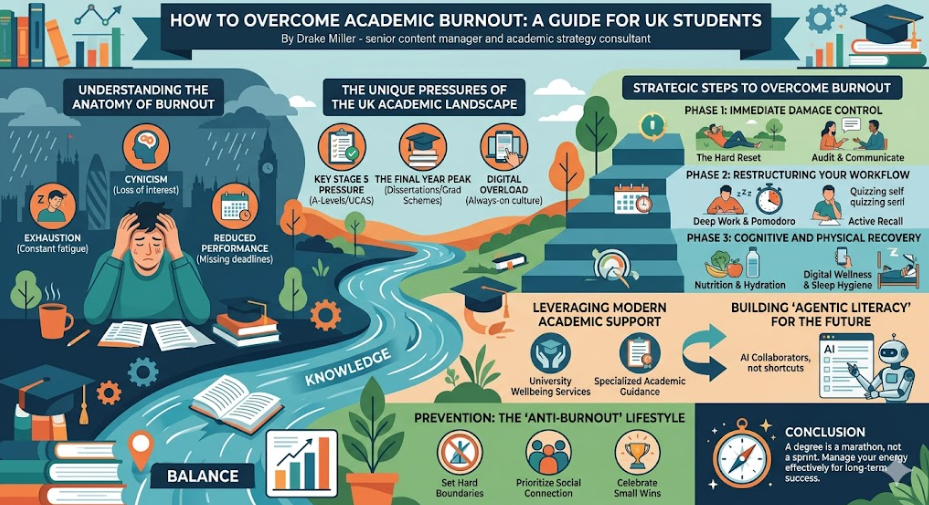
Understanding the Anatomy of Burnout
Academic burnout does not happen overnight. It is a gradual accumulation of stressors that eventually breach your coping mechanisms. The World Health Organization (WHO) recognizes burnout as an occupational phenomenon, and for a student, “study” is the occupation. When the workload becomes paralyzed by anxiety, many students look for external support to pay someone to do your assignment as a way to regain their mental footing.
Symptoms typically manifest in a triad:
- Exhaustion: Feeling constantly drained regardless of how much sleep you get. This isn’t just “tiredness”; it is a deep-seated lethargy that makes even simple tasks like opening a laptop feel Herculean.
- Cynicism and Detachment: A loss of interest in your subject, feeling that assignments are pointless, or withdrawing from peers and seminars. You may find yourself wondering, “What is the point of this degree anyway?”
- Reduced Performance: Difficulty concentrating, missing deadlines, or a sharp decline in the quality of work that previously came easily. In these moments, the impulse to write my assignment with professional guidance can help break the “shame cycle,” where poor performance causes more stress, which in turn worsens the burnout.
The Unique Pressures of the UK Academic Landscape
UK students face specific structural pressures that differ from other global systems. The intensive nature of the three-year degree (four in Scotland) means there is little room for error. Furthermore, national reports often highlight that financial stress and the “all-or-nothing” nature of final exams contribute significantly to the current student mental health crisis.
1. The Key Stage 5 Pressure Cooker
For High School and Sixth Form students, burnout often begins during the A-Level or T-Level years. The pressure of the UCAS application deadline, combined with the realization that two years of study culminate in a few hours of exams, creates a “performance anxiety” that can lead to early-onset burnout before university even begins. Students are often told these years “define their entire future,” a weight that is psychologically taxing.
2. The “Final Year” Peak
For university students, the dissertation or final year project represents the culmination of years of work. The weight of this single 10,000-word document can trigger a “freeze” response, where the task feels so gargantuan that starting it seems impossible. This is often compounded by the “Graduate Scheme” hunt, where students apply for dozens of roles while trying to maintain a First-Class average.
3. The Digital Overload and “Always-On” Culture
With the rise of digital learning platforms like Canvas and Blackboard, students are expected to be “always-on.” The boundary between home and the lecture theatre has blurred, making it harder for the brain to switch into recovery mode. The constant ping of notifications can leave the nervous system in a state of low-level “alert” 24/7.
Strategic Steps to Overcome Burnout
If you recognize the signs of burnout, the solution isn’t just “working harder.” It requires a systemic change in how you approach your life and studies.
Phase 1: Immediate Damage Control
The Power of the ‘Hard Reset’ When you are in the depths of burnout, your cognitive load is maxed out. You need a period of complete detachment. If possible, take a 48-hour “study-free” weekend. No checking emails, no reading notifications, and—most importantly—no “guilt-tripping” yourself about the work you aren’t doing. This allows your nervous system to exit the “fight or flight” mode and begin the process of cellular and mental repair.
Audit Your Deadlines and Communicate Do not suffer in silence. Communicate with your Head of Sixth Form, personal tutor, or course leader. Most UK institutions have “Extenuating Circumstances” (EC) or “Special Consideration” policies. If burnout has affected your mental health, you may be eligible for short-term extensions. This removes the immediate “deadline dread” and provides the breathing room necessary to recover.
Phase 2: Restructuring Your Workflow
Deep Work and the Pomodoro Technique Burnout often stems from “shallow work”—spending eight hours staring at a screen while being distracted by social media. This is exhausting but yields zero progress.
- Deep Work: Schedule 90-minute blocks for high-intensity cognitive tasks, such as drafting a literature review or solving complex physics equations.
- Pomodoro: On days when concentration is low, use 25 minutes of work followed by a 5-minute break. This makes the “mountain” of a dissertation feel like a series of small, manageable hills.
Active Recall over Passive Reading One reason students burn out is that they spend hours re-reading notes—an inefficient, “low-utility” way to learn. Active recall (testing yourself) is more cognitively demanding but takes significantly less time to produce results. By working smarter, you reduce the total hours spent at your desk, leaving more time for genuine rest.
Phase 3: Cognitive and Physical Recovery
The Nutrition-Cognition Link The “student diet” of excessive caffeine and ultra-processed snacks can exacerbate anxiety and ruin sleep cycles. Brain-healthy fats (omega-3s), complex carbohydrates for steady energy, and consistent hydration are foundational. Avoid the “caffeine crash” cycle, which mimics the physiological symptoms of a panic attack.
Digital Wellness and Sleep Hygiene Exposure to blue light before bed inhibits melatonin production. Aim for a “digital sunset” one hour before bed. High-quality sleep is the only time your brain flushes out metabolic waste—essential for clearing the “brain fog” associated with burnout.
See also: How to Choose the Best Earthing Products for Daily Use
Leveraging Modern Academic Support
In 2026, students should not navigate these pressures in isolation. Utilizing professional support is a strategic move to manage cognitive load.
1. University and School Wellbeing Services
Every UK institution has a wellbeing team. Whether it is the University of Manchester’s counseling service or Sydney-based student support systems for those on year-abroad programs, these resources are there to help manage the psychological side of burnout.
2. Specialized Academic Guidance
Sometimes, burnout stems from a genuine lack of understanding of a complex subject, leading to “imposter syndrome.” Seeking external help, such as a specialized academic support service, can provide the clarity needed to get back on track. Whether it is a complex programming task or a literature review, having a mentor or expert guide can simplify the process, allowing you to focus on learning rather than stressing over formatting and structure. This form of guidance is a legitimate way to develop the skills needed to complete your own work to a higher standard.
Building “Agentic Literacy” for the Future
As we move into an AI-first academic world, the way students work is fundamentally changing. “Agentic Literacy”—the ability to use AI tools as collaborators rather than just shortcuts—can actually reduce burnout.
By using AI to help structure an outline, explain a difficult concept in simpler terms, or check for grammatical consistency, you save the mental energy required for the actual critical thinking and original writing. This “agentic” approach allows you to outsource the menial, repetitive parts of research so you can focus on the high-level synthesis that defines great academic work. However, the goal is collaboration, not dependency. Over-reliance can lead to a loss of agency, which contributes back to the feeling of detachment—a core component of burnout.
Prevention: The “Anti-Burnout” Lifestyle
Once you have recovered, you must build a “firewall” to prevent a relapse.
- Set Hard Boundaries: Treat your studies like a 9-to-5 job. When the clock strikes five, close your laptop and physically move to a different space.
- Prioritize Social Connection: Isolation is a major driver of cynicism. Make time for university societies, local sports, or just a coffee with friends.
- Celebrate Small Wins: Burnout makes you feel like you’re getting nowhere. Keep a “Done List” instead of just a “To-Do List” to visualize your daily progress.
Conclusion
Academic burnout is a signal from your body and mind that your current system is unsustainable. It is not a sign of weakness or a lack of intelligence. By implementing structured work habits, seeking expert support when necessary, and prioritizing your physical health, you can navigate the rigors of UK higher education without sacrificing your well-being. Remember, a degree is a marathon, not a sprint. The most successful students are those who manage their energy as effectively as their time.
Frequently Asked Questions
Q.1 Can I get an extension for burnout?
Most UK universities include “mental health issues” under extenuating circumstances. You will likely need a note from a GP or the university counseling service to support your claim.
Q.2 How do I know if it’s just stress or actual burnout?
Stress is usually “over-engagement” (anxiety, urgency), whereas burnout is “disengagement” (numbness, hopelessness). If you no longer care about the outcome of your exams, you are likely burnt out.
Q.3 Is using assignment help services considered cheating?
Using services for guidance, tutoring, and understanding how to structure your work is a legitimate form of academic support. It helps you develop the skills needed to complete your own work to a higher standard.
About the Author
Drake Miller is a senior content manager and academic strategy consultant with over twelve years of experience in the higher education sector. Based in London and Sydney, he specializes in student productivity, digital wellness, and the ethical integration of Agentic AI in academia.
